What the Brazilian coast quietly teaches about designing with lightness
Some places slow us down without even asking.
Florianópolis is one of them.
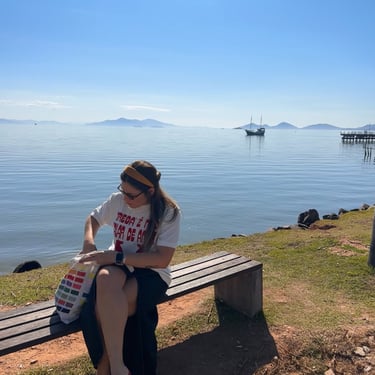
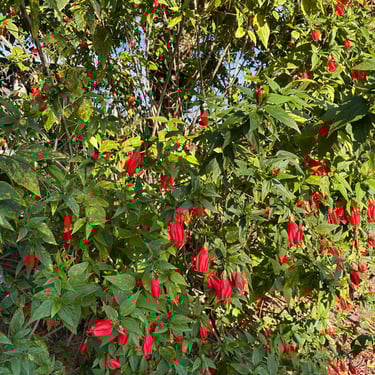
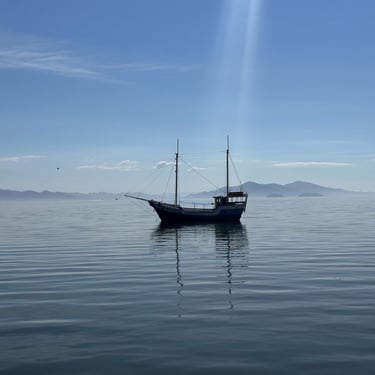
The island carries a particular rhythm. There are beaches with calm, almost quiet waters and others with strong waves that attract surfers from around the world. The sea is never far away, the hills are covered in deep green and the light changes throughout the day in a way that feels almost painterly. Blues from the water, soft whites from older buildings and layers of vegetation create a palette that seems naturally balanced.
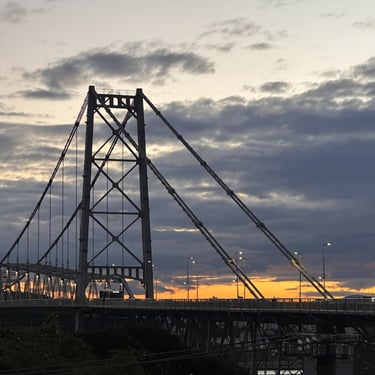
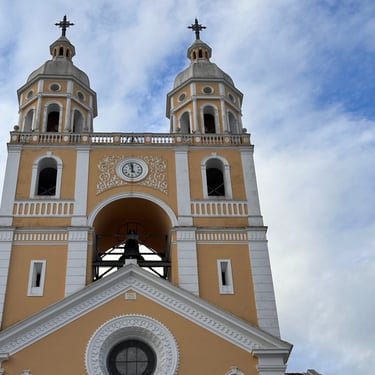
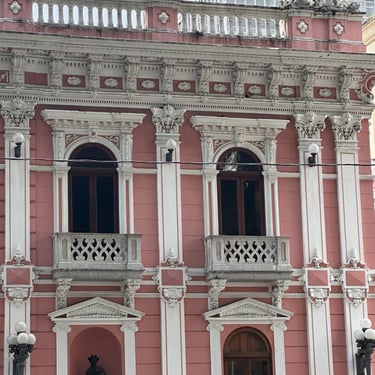
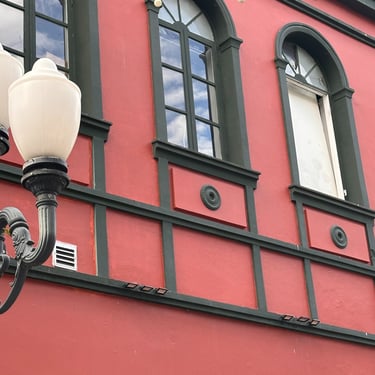
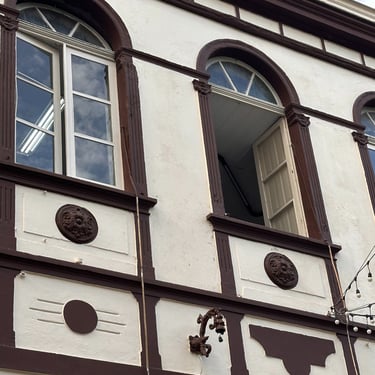
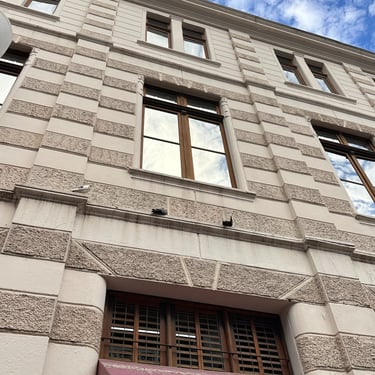
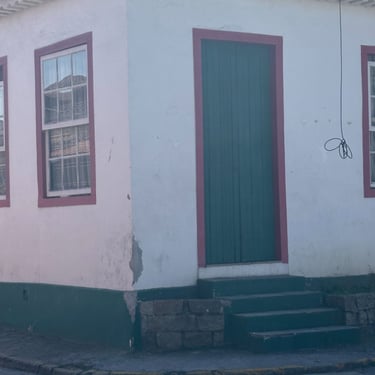
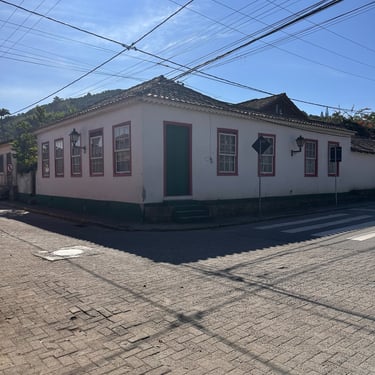
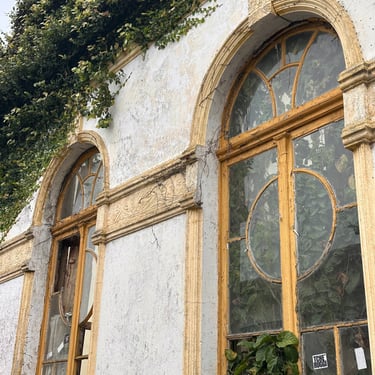
Walking through the city, what often catches my attention is the presence of older architecture quietly coexisting with more recent buildings. Small colonial houses, preserved façades, wooden doors and simple windows that have witnessed decades pass.
This coexistence between different periods is something I often think about when designing interiors.
Spaces rarely need to be created all at once. Much like cities, they can evolve in layers. And very often the beauty lies precisely in allowing those layers to remain visible.
Florianópolis also carries a strong relationship with craft. Small markets and handmade pieces appear throughout the city. Ceramics, woven fibres, wooden objects and textiles that clearly hold the imprint of the person who made them.
There is a certain calmness in handmade work.
And perhaps that calmness is exactly what makes it so compelling.
During this trip an unexpected detour became one of the most memorable moments of the journey.
On our way back towards Araraquara we stopped in Curitiba. Paulinho and I were travelling with a Swedish couple we were accompanying while they explored Florianópolis and studied Portuguese. It was a short trip filled with laughter. Brazilians and Swedes communicating in English while discovering and presenting places to one another inevitably creates wonderful memories. Somewhere along the way we spontaneously decided to take the historic train that connects Curitiba to Morretes.
The railway, inaugurated in 1885, crosses the Serra do Mar and is still considered one of the most scenic train journeys in Brazil.
The track winds through mountains covered in Atlantic rainforest, crossing historic bridges and tunnels that feel as if they belong to another century.
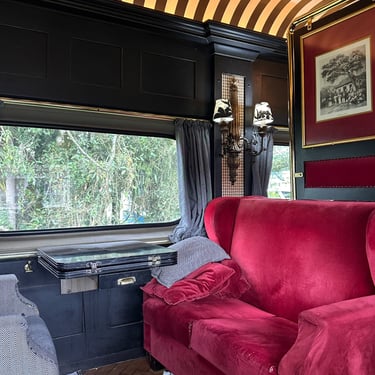
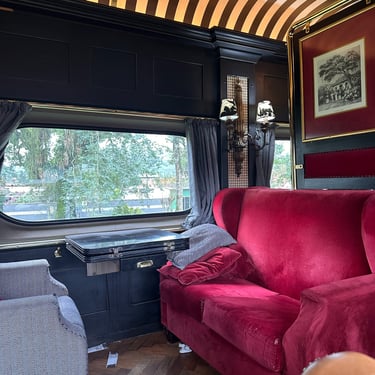
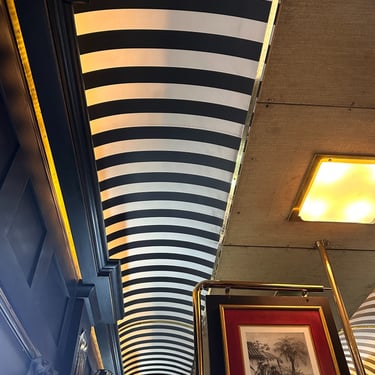
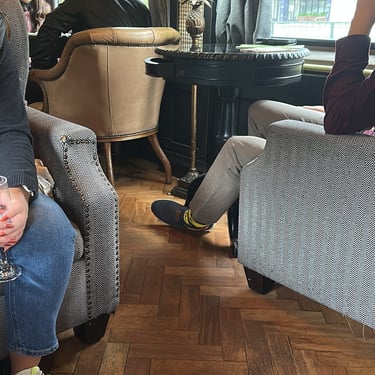
There are different carriage categories, but the highest class offers a particularly evocative atmosphere. The interior design echoes the elegance of classic railway travel. Comfortable armchairs, darker woods, subtle metal details and a quiet sense of nostalgia.
It becomes easy to imagine what travelling like this must have felt like when trains were the great connectors of distant places.
Design has that ability.
A carefully composed space can transport us somewhere else entirely.
Arriving in Morretes the atmosphere changes again.
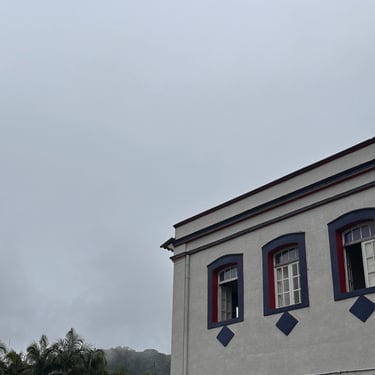
The town is small and calm, crossed by the Nhundiaquara River that gently runs through its historic centre. Many colonial buildings remain preserved, painted in soft colours that maintain the town’s identity.
Morretes is also known for its artisan markets and craft traditions. Small stalls display embroidery, ceramics, wooden objects and handmade pieces created by local makers. It is the kind of craft that still carries strong cultural roots.
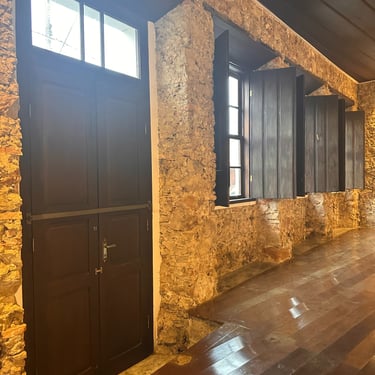
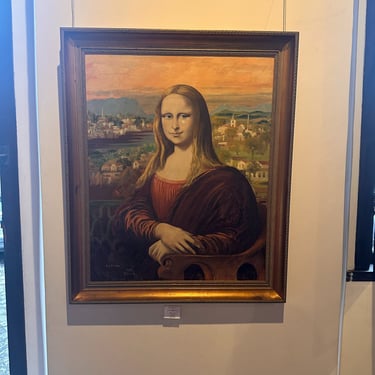
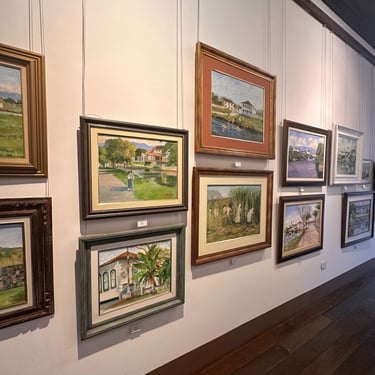
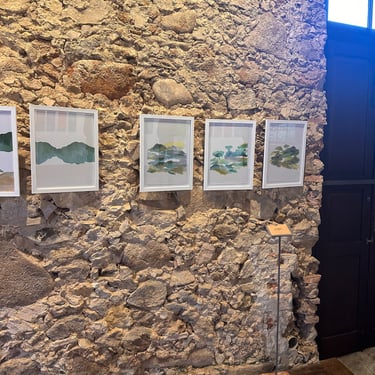
During our walk I also came across a small local exhibition. Moments like these are gentle reminders that creativity often grows quietly, even in the smallest places.
The return journey from Morretes is done by transfer along the mountain roads, which makes the train experience feel almost like a self-contained chapter within the trip.
Yet one of the most beautiful parts of that day was something much simpler.
Watching someone experience it for the very first time.
Our Swedish friends had never seen landscapes like that. The density of the Atlantic rainforest, the humidity in the air, the slow rhythm of the train crossing the mountains. There was a genuine sense of wonder in their eyes.
Observing someone discovering something new often makes us rediscover it ourselves.
Moments like this always travel back with me into my work.
Designing spaces is, in many ways, about creating first experiences. Environments that can welcome, support daily life and quietly enchant the people who inhabit them.
There is something very beautiful about realising that a well considered space can create that subtle sense of discovery.
Florianópolis and Morretes may not share the same urban scale as many European cities I visit, yet they offer something equally valuable.
A certain natural ease.
The way the sea becomes part of the landscape, the presence of greenery, the craft traditions, the preserved buildings and the gentle coexistence of past and present.
When thinking about interiors, I often return to that feeling.
Designing with lightness.
Allowing spaces to breathe.
Creating environments that do not try to prove anything, yet quietly invite people to stay a little longer.