What Hampstead taught me about natural light
I did not understand London’s light immediately.
It took time, and several returns, to realise that it does not impose itself. It reveals itself slowly.
It was in Hampstead that this became clear.
Barnes has always felt more intimate to me. More contained. Light moves gently across brick façades and residential streets in a way that feels almost domestic. Hampstead operates differently. There is elevation. There is horizon. There is wind. The city appears in the distance but never dominates.
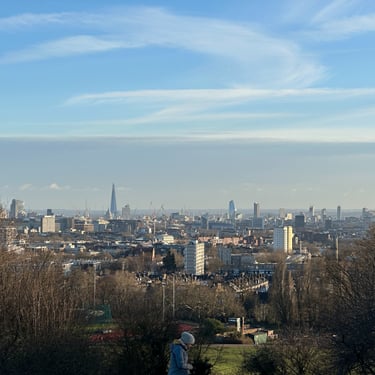
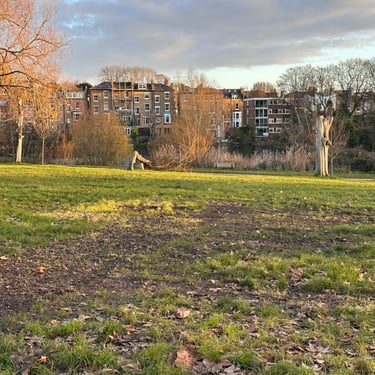
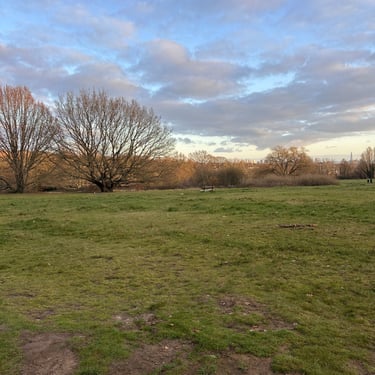
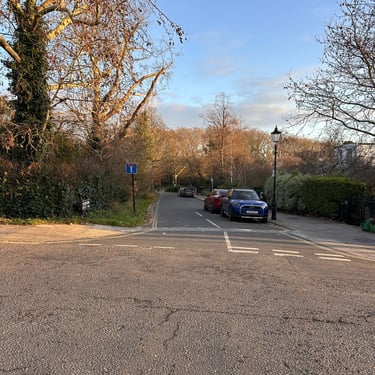
Walking up to Hampstead Heath changes your pace. The climb opens your breath, and once at the top, London unfolds in layers. The skyline rests quietly along the horizon while the sky occupies most of the frame.
That is where I began to pay attention to direction.
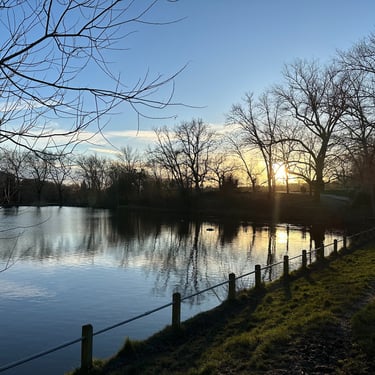
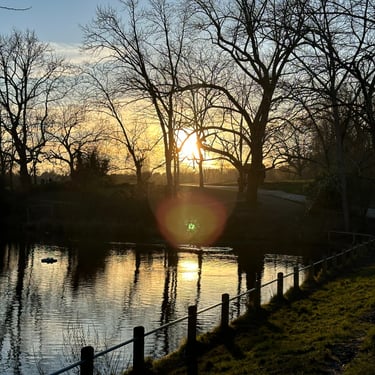
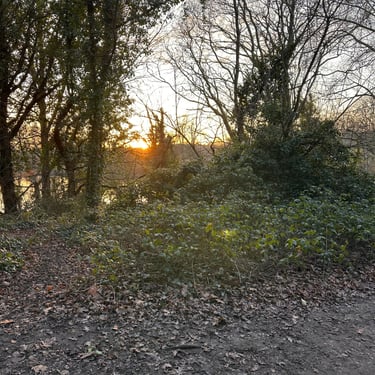
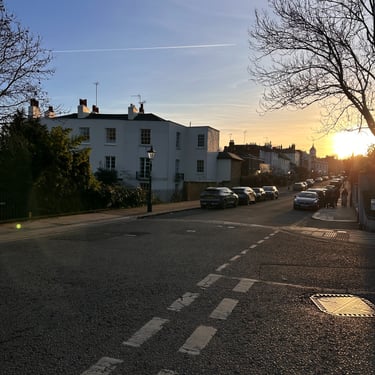
In winter, the sun sits low. It does not fall from above. It enters from the side. It traces bare branches, intensifies the uneven greens of the grass and casts elongated shadows that feel almost architectural. Nothing is flat. Light reveals volume.
Hampstead taught me that natural light does not need abundance to be meaningful. It needs direction.
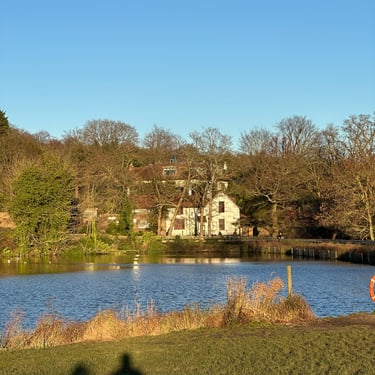
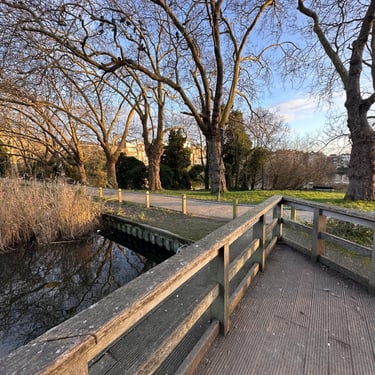
The ponds are part of this lesson. Even in winter, someone is always swimming. There is a man known for entering the water every single day, regardless of temperature. No spectacle. Just ritual. Steam rising from dark water, a solitary figure moving through it, the surrounding landscape quiet. Low light touches the surface and depth appears.
London’s parks also reveal something else. The deep connection with dogs. In Hampstead, they run freely, dive into ponds, cross paths without ceremony. The landscape is not ornamental. It is lived in. Movement, mud, water, repetition. Light follows all of it.
After the Heath, the neighbourhood continues at the same rhythm.
Hampstead’s architecture feels older and denser than Barnes. Georgian façades, weathered brick, substantial doors, carefully proportioned windows. Light strikes these surfaces and accentuates texture. Nothing feels superficial.
Cafés mirror that atmosphere. Small spaces, generous windows, wood, ceramic, steam rising from coffee cups. There is always someone reading. Often a dog resting beneath a table. Near one of the park entrances, the crêpe cart has become something of a quiet landmark. Simple and constant. The sweetness of batter contrasts with the cold air. Afternoon light catches the steam rising from the hot plate and turns an ordinary moment into something memorable.
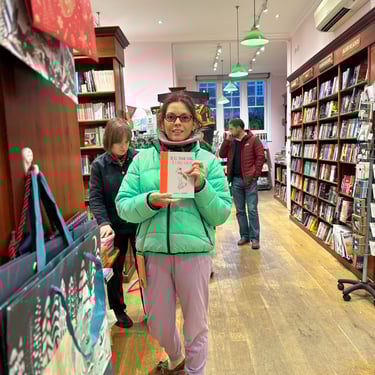
It was in Hampstead’s Daunt Books that I bought The Heath by Hunter Davies.
This branch feels different from the well-known Marylebone store. There are no dramatic skylights or overhead illumination. In Hampstead, the space is more intimate. Light enters from the street facing windows, lateral and gentle, especially in winter. It moves quietly across the dark wooden shelves and settles on book spines without drawing attention to itself.
The atmosphere feels contained, almost domestic. Wood warms the interior, aisles feel closer, and natural light does not perform. It accompanies. It is the kind of light that encourages staying rather than spectacle.
The Heath is both historical and personal. Hunter Davies writes about the preservation of Hampstead Heath, about the regular swimmers, the walkers, the long-time residents who fought to protect the landscape from development. The book speaks about belonging and about how a public landscape can shape the identity of a place.
Reading it there made the lesson clearer.
Hampstead taught me that natural light is not simply a physical condition. It builds atmosphere. It influences behaviour. It shapes proportion.
It determines where we sit, where we walk, where we open a window.
In Barnes, light embraces.
In Hampstead, it draws.
And drawing, in essence, is designing.