Verona, Light and Layers of History
Yesterday I was writing here about reupholstering. About how objects can gain new layers of life without losing the memory of everything they have already lived through.
Today I return to talking about a place.
Travel always reminds me why I enjoy what I do so much. Every city reveals something different and, almost without noticing, I end up collecting small lessons that later find their way into my projects.
During my trips I always carry a small notebook. I write down impressions, little details, ideas that appear while I walk. Interestingly, when I read these notes later, I realize some themes appear again and again. Respect for what already existed. The balance between old and new. And the importance of natural light.
Verona made me think about this a lot.
The city seems to have learned how to live in balance with its own history. Nothing feels rushed. Nothing seems to need to prove anything. The ancient buildings remain firmly in place while contemporary life unfolds around them with ease.
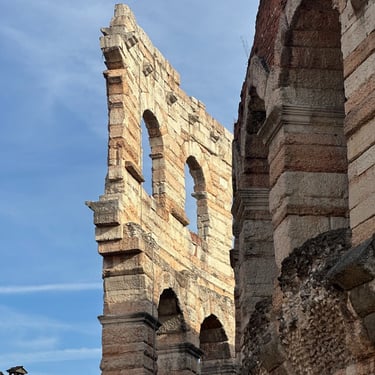
One of the great symbols of the city is the Arena di Verona, the Roman amphitheater that dominates Piazza Bra. It was built in the first century, around the year 30 AD, and it is actually a little older than the Colosseum in Rome. Even today it hosts concerts and open air operas. It is remarkable to see how a structure that is nearly two thousand years old still brings people together.
This says a lot about the way Italians treat their cities.
Instead of replacing the past, they incorporate it. They adapt it. They adjust it. They find new uses for what already existed.
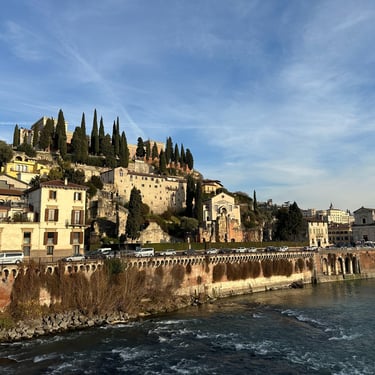
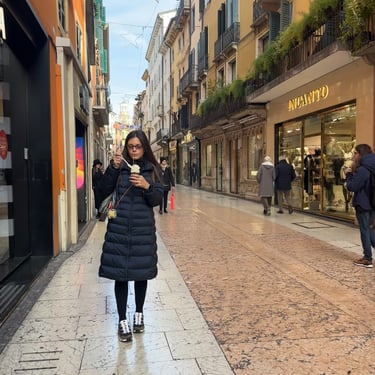
Walking through Verona you feel this everywhere. In the marble streets that softly reflect the late afternoon light. In other streets where the stone feels even older, uneven, almost as if it were telling stories under your feet. In buildings from different centuries that coexist side by side without competing with each other.
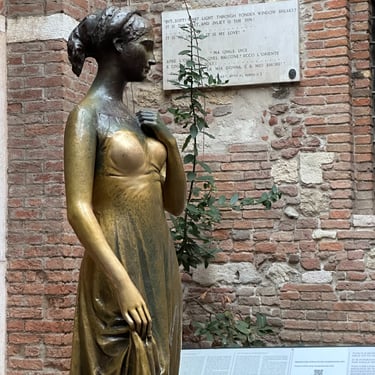
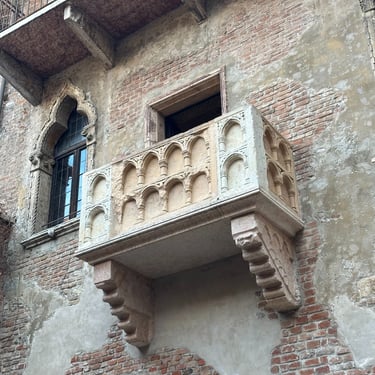
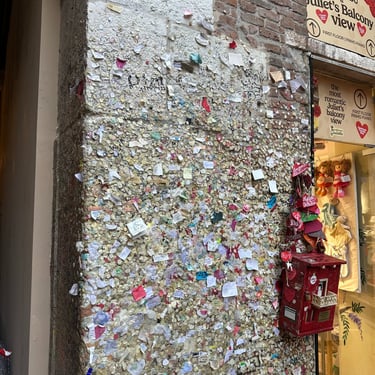
Verona also carries a strong romantic imagination because of Romeo and Juliet. The famous balcony of Juliet’s house attracts visitors from all over the world, inspired by Shakespeare’s story. Interestingly, the house did in fact belong to a family called Cappello, a name very close to Capulet from the play. The balcony we see today was added only in the twentieth century during the building’s restoration.
In a way, the city embraced the mix between literary imagination and real history.
Perhaps that is why Verona feels so particular. Romantic, but in a calm and gentle way. Artistic, but without excess. A type of beauty that does not need to call attention to itself.
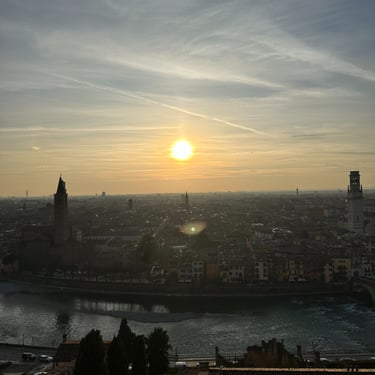
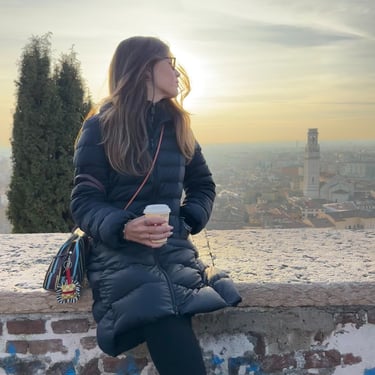
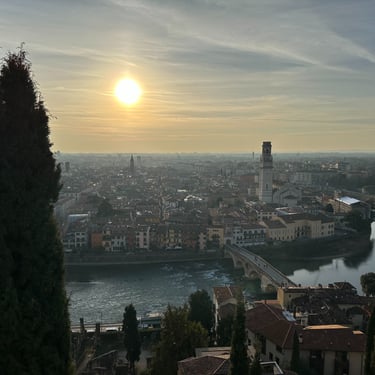
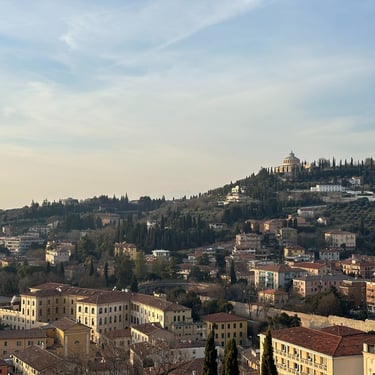
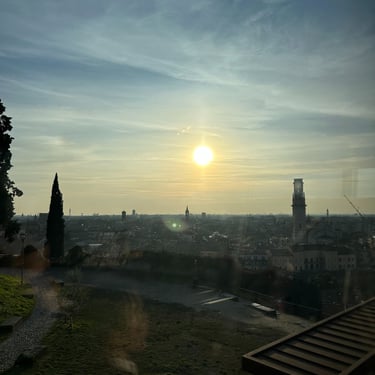
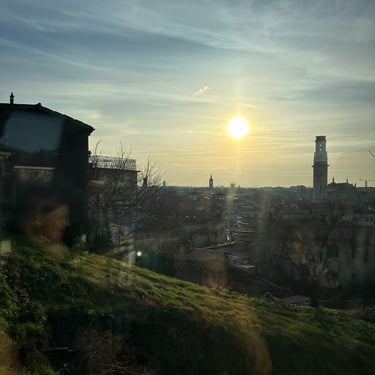
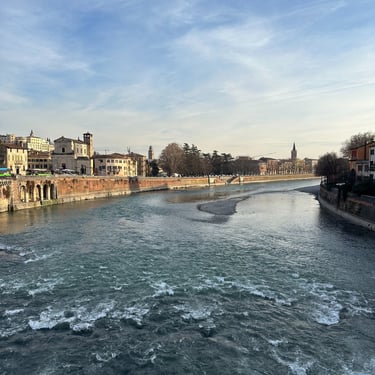
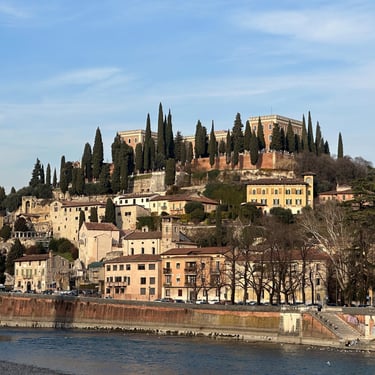
Some viewpoints simply take your breath away. From the hills overlooking the Adige River as it curves around the city, towers and churches slowly appear across the horizon. In the late afternoon the golden light spreads across the terracotta rooftops and everything seems quieter.
It was while observing this light that I found myself thinking again about something that constantly follows me in my work.
I simply cannot like cold lighting.
The more I study and observe how natural light touches materials throughout the day, the more convinced I become that welcoming environments ask for warm light. A softer light, closer to what we see at sunrise or late afternoon.
I also strongly believe in using the right proportions of light according to the purpose of each space. Not everything needs to be fully illuminated all the time. In fact, very often it is the lower light that creates atmosphere.
Table lamps, for example, have an incredible power. They draw small islands of light inside a space. They create layers. They create scenes.
It is interesting to notice how older cities seemed to understand this naturally. The architecture, the windows, the thickness of the walls all appear to work with the light instead of competing with it.
Maybe that is why walking through Verona feels so pleasant.
There is a softness in the city. A calm rhythm. A beauty that does not impose itself but slowly reveals itself as you observe.
And that reminds me of something I try to bring more and more into my projects.
What is truly cozy rarely announces itself loudly.
A truly welcoming space does not shout comfort. You simply feel it. Sometimes you cannot even explain why.
Usually it comes from the sum of many small decisions. From the careful choice of materials. From respecting what already existed. From the way light enters a space and transforms it throughout the day.
Design, in the end, is also an exercise in sensitivity.
Listening to the place. To the light. To the story that was already there before we arrived.
And cities like Verona remind us of this with great delicacy. That some of the most beautiful spaces in the world were not created to impress.
They were built slowly.
And maybe that is exactly why they remain so alive.