Elegance in a Whisper
Milan does not need to introduce itself. It whispers.
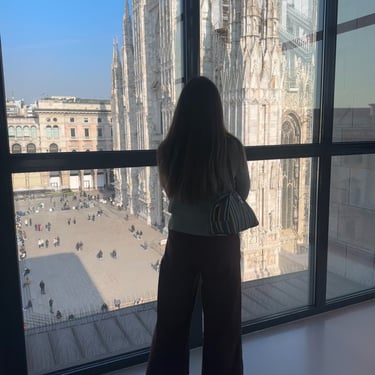
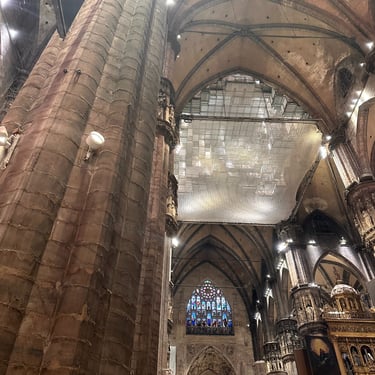
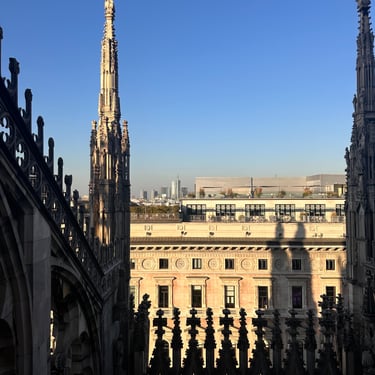
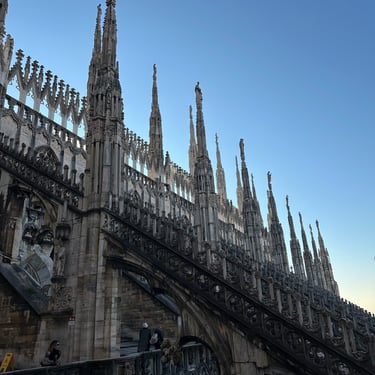
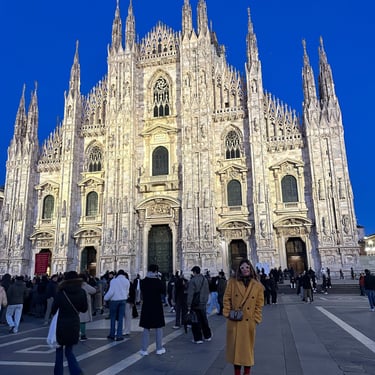
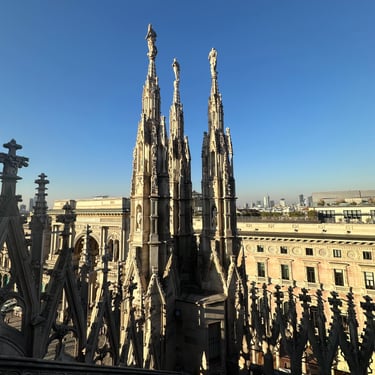
The Duomo rises at the heart of the city like lace carved in marble. Nearly six centuries in the making. More than three thousand statues watching over the square, as if guarding time itself. When you step onto the terraces, you understand that grandeur can still feel delicate. The marble comes from Candoglia and to this day there is an institution devoted to preserving it. Nothing there was rushed. Everything is process.
The cathedral itself is proof that meaningful architecture is never the work of one mind alone. It demands engineers, designers, artisans and long term vision. Decisions made for generations yet to come.
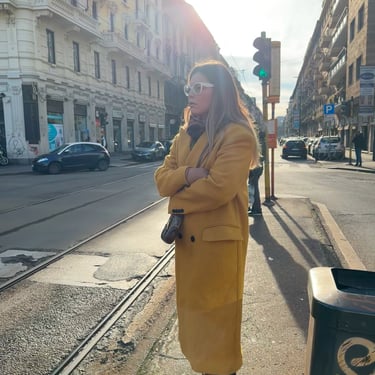
Milan taught me that elegance is quiet. It lives in the precise cut of a coat, in well cared shoes, in restraint. Italians dress with intention. Not to impress, but to express. Unlike the effortless warmth of Brazilians or the composed pragmatism of the British, the Italian gaze seems trained to notice detail, proportion and harmony.
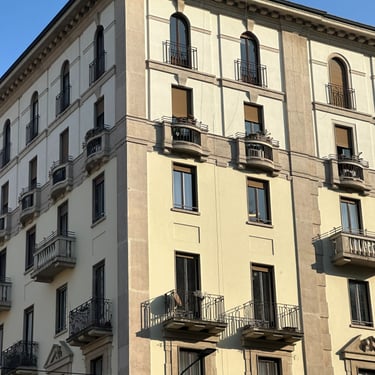
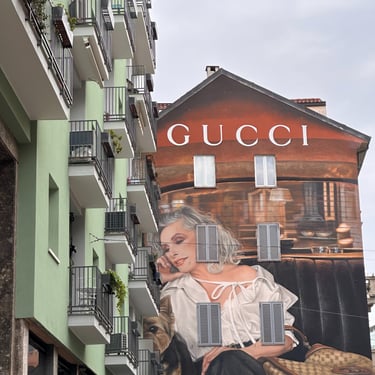
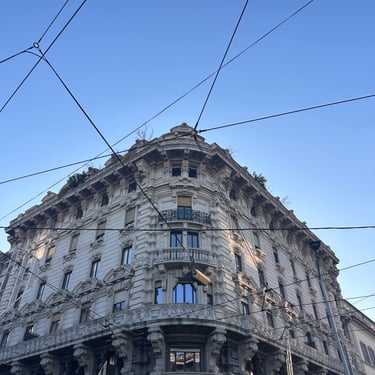
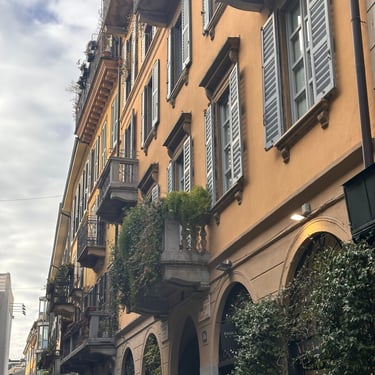
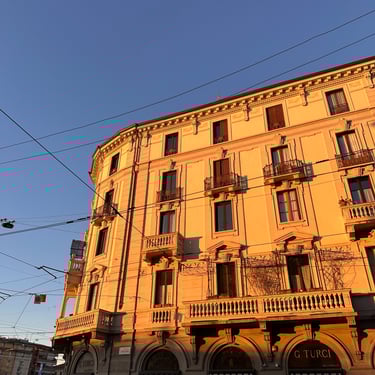
In the Quadrilatero della Moda, home to some of the most luxurious brands in the world, there is a subtle paradox. The ultimate expression of luxury exists there, yet the facades remain restrained, almost discreet. The opulence is in the craftsmanship, not in visual excess. It is a kind of confidence that does not require spectacle.
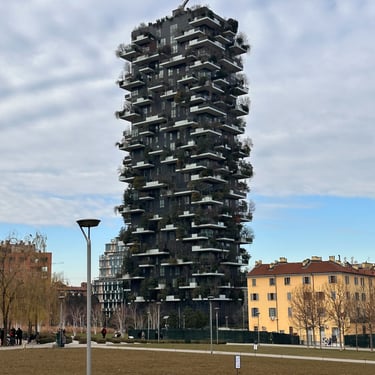
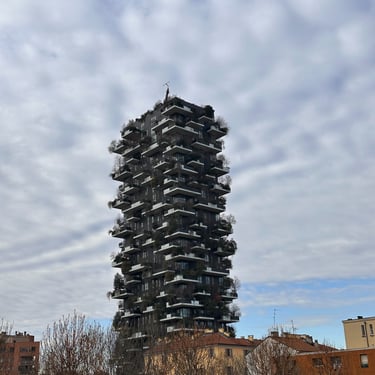
Yet Milan is not frozen in history. Districts like Porta Nuova redefine the skyline. The Bosco Verticale integrates more than nine hundred trees into residential towers, merging nature and structure in a way that required deep collaboration between architects, engineers and botanists. It is not decoration. It is strategy. It is understanding how space affects well being.
That resonates deeply with my work. Every project begins with conversation. There is no template. There is no universal formula. There is listening. Just as a city evolves by responding to its time, I design by understanding the individual story in front of me. Spaces should adapt to life’s changes while maintaining identity.
Quality here is not defined by price, but by care, tradition and time. What is well made deserves recognition. After World War II, Milan had to rebuild much of itself. Design became a cultural tool for reconstruction. It was about restoring belonging and stability, not just aesthetics.
That is the power of thoughtful design. Well conceived spaces ground us. They create security. They shape mood, productivity and connection. When designed with intention, they can adapt to new contexts without losing their essence.
Milan confirmed something I carry into every project. Elegance does not need to be loud to be unforgettable. It simply needs to be true.