Barnes: permanence and atmosphere
Descrição do post.
There are areas in London defined by monumentality.
Barnes does the opposite.
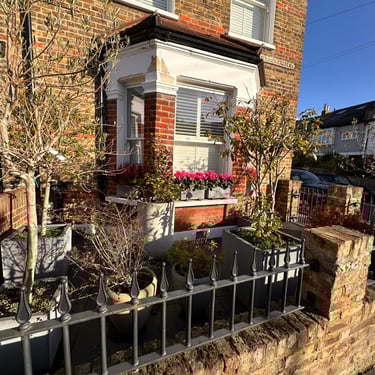
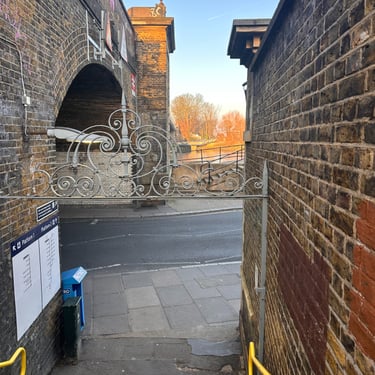
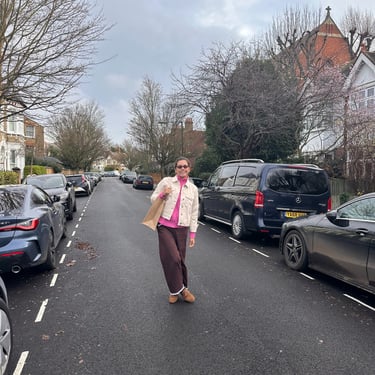
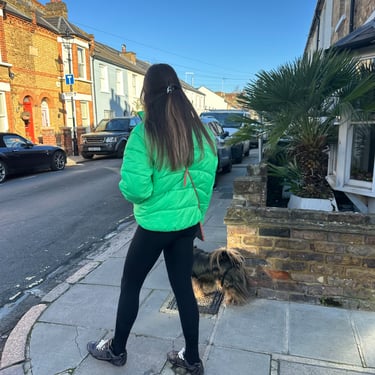
Located along the Thames, just minutes from central London, the neighbourhood preserves an atmosphere that feels almost suspended in time. Victorian brick façades, bay windows, modest front gardens and cast-iron railings create a setting that does not rely on spectacle it relies on permanence.
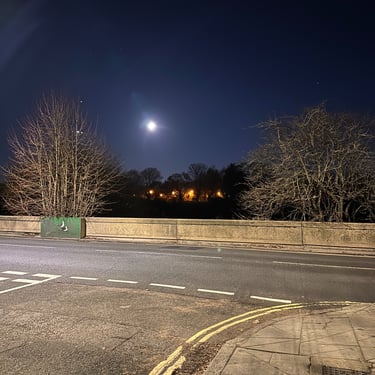
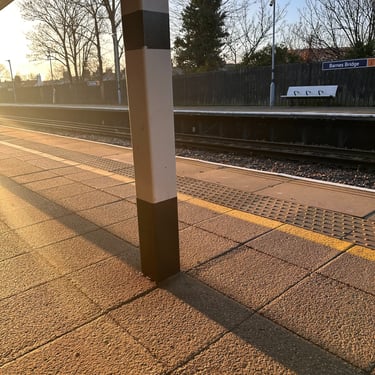
Historically a riverside village, Barnes developed significantly during the 19th century with the expansion of the railway. It became a refuge for artists, musicians and thinkers seeking proximity to the city while maintaining a neighbourhood scale of life. The river shapes both its geography and its rhythm: walking, observing, crossing bridges, waiting for the train.
Daily life is valued here.
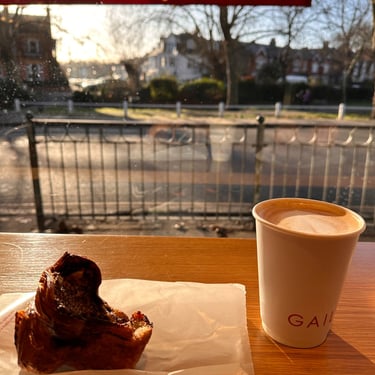
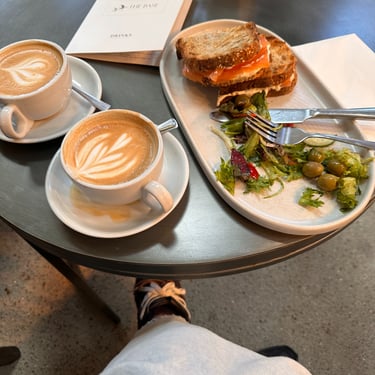
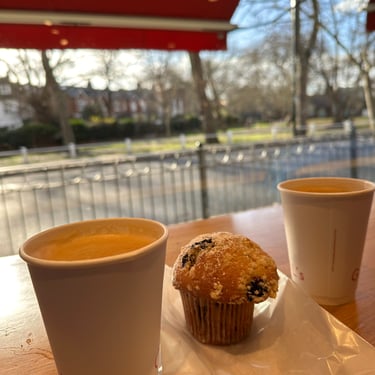
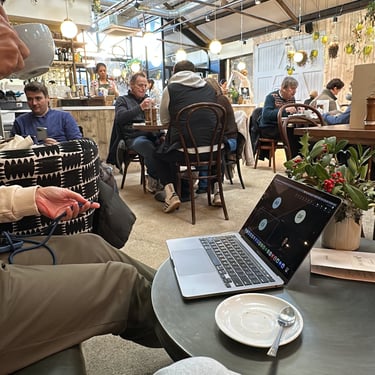
Independent cafés such as Base and Gail’s operate as extensions of the home. Winter light filtering through glass, steam rising from coffee, the quiet presence of people reading or working subtle details reveal how space shapes behaviour.
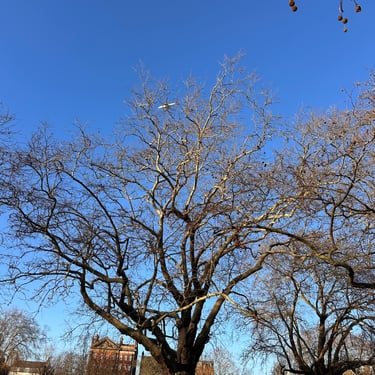
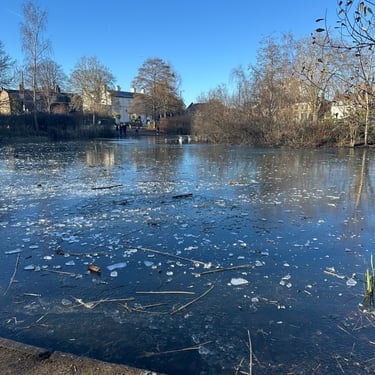
In winter, the park freezes. The pond becomes reflective, vegetation turns skeletal and structure becomes visible. Much like interiors when excess is removed, the landscape reveals its framework.
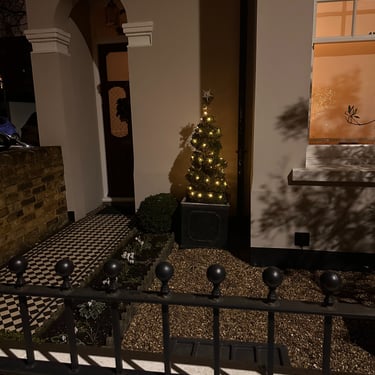
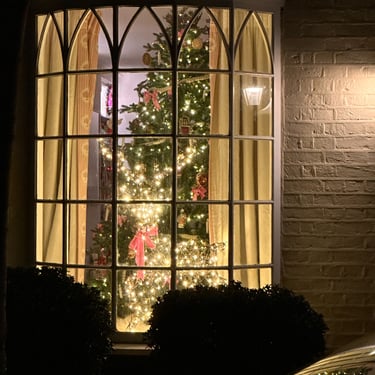
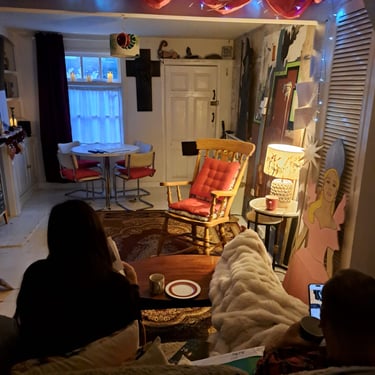
The houses maintain classical proportions. Arches, bay windows, checkerboard entrance tiles, restrained landscaping. During Christmas, illumination remains intimate. From the street, a lit tree behind curtains feels less like display and more like domestic ritual.
Barnes speaks of human scale.
Of rhythm.
Of coexistence.
Children, dogs, markets, trains.
Life unfolding in layers.
Returning here repeatedly influences my work directly: attention to detail, texture, natural light and architectural restraint.
Barnes does not seek to impress.
It endures.